top of page


Laser Engraving
Laser engraving is a precise and versatile marking technique that uses focused laser beams to etch designs, text, or images onto materials. Laser engraving offers high-quality results and a remarkable level of detail, which is why this innovative technology is widely used in many applications from manufacturing to gift personalisation.
Whether applied to wood, acrylic, glass, metal or any one of many other materials, laser engraving allows for intricate designs that are both durable and visually appealing. As businesses and artisans continue to embrace this method, laser engraving stands out as a powerful tool for creativity and customisation.
Materials
Choosing the correct material for your laser engraving project is one of the most important decisions you will have to make. At Droylsden Laser we specialise in laser engraving on a wide range of materials, each with their own unique properties, appearance and style.
Below is a list of some of the most popular materials that we work with.
Wood


Wood is one of the most popular and versatile laser engraving materials. With a wide choice of wood types readily available, the process works by burning away a thin layer of wood, resulting in a permanent and visually appealing mark. This method is especially popular for personalising a wide variety of items, crafting unique and thoughtful gifts, and producing detailed, eye-catching signage. Laser engraving can also be used on wood to create intricate 3D relief carvings.
There are a large number of different types of wood which are suitable for laser engraving, and the process can quickly produce beautifully finished products that are sure to impress.
Common woods used for laser engraving include: alder, balsa, bamboo, basswood, cedar, cherry, mahogany, maple, MDF, oak, pine, plywood & walnut*
* this is not an exhaustive list - if your material is not shown please get in touch and we will determine if your material is suitable for laser engraving
Acrylic


Acrylic is a type of rigid plastic that is commonly used in a variety of applications. It is a thermo-plastic, meaning that it softens when heated, allowing it to be formed into three-dimensional configurations. This is one of the reasons why it is often used for signage and displays.
There are two types of acrylic sheet - cast and extruded. Both can be engraved using a laser, but the final results are not identical.
Laser engraving on cast acrylic is often considered superior to extruded acrylic due to its clarity and depth. Cast acrylic has a smoother surface, which allows for more precise and detailed engraving, resulting in a higher-quality finish. Furthermore, when engraved, cast acrylic produces a uniform frosted effect that enhances visibility, making the design stand out more prominently.
In contrast, extruded acrylic tends to produce a less defined appearance when engraved, which may diminish the overall quality of the design.
Additionally, cast acrylic is generally more resistant to scratching and UV damage, ensuring that engraved designs remain clear and vibrant over time.
Metal


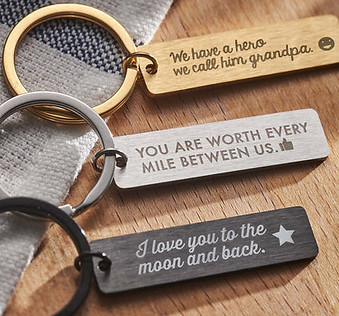

Metals can be some of the most challenging materials to use for laser engraving, but are also arguably some of the most rewarding when done correctly.
There are several different types of laser engraving applications using metal materials, and they each come with their own challenges and unique results.
One of the most common - and simplest - forms of metal engraving is done using coated metals such as aluminium and stainless steel. In these cases, the laser simply removes the coating material to expose the metal below. This is a very quick and simple process which can yield impressive results, and is often used to create personalised gifts as well as branded giveaway items, such as pens and USB flash drives.
Another common usage is to simply remove layers of material to produce deep etching on medals and coins.
Probably the most challenging, but also the most impressive use, is to create coloured artworks on materials such as stainless steel. By carefully controlling the speed and power of the laser, different areas of the metal can be heated up to different temperatures, causing a predictable colour change. This method can produce some stunning results, but can be expensive due to the amount of work required to achieve the results.
Common metals used for laser engraving applications include: stainless steel, aluminium, brass, gold, silver, copper & titanium.*
* this is not an exhaustive list - if your material is not shown please get in touch and we will determine if your material is suitable for laser engraving
Glass


Glass is another popular material used for laser engraving, particularly for awards and gifts. However, as a material it presents several challenges, largely due to it's fragile nature and the wide range of different compositions available.
One major challenge is the risk of shattering due to the heat generated during the engraving process. To mitigate this, we use a specialised CO2 laser, a low power setting and take short passes to control the heat.
Achieving precise details can also be tricky, as impurities in the glass can reflect and scatter the laser beam, leading to loss of definition.
At Droylsden Laser we take the utmost care to ensure that our glass engraving is done to the highest possible standards, but regardless, engraving on glass is both tricky to get right and unforgiving if done wrong. For this reason we like to recommend alternative materials, such as clear acrylic, where possible, as this helps to keep the customer's costs down.
Stone


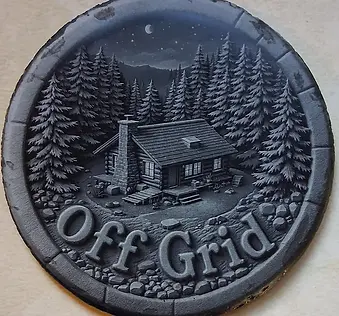
Laser engraving on stone and slate is a effective method for producing detailed and long-lasting results, and for this reason is often employed for outdoor signage and memorials.
There are two main types of laser engraving used on stone and slate. The first, surface engraving, is a relatively quick and simple process that creates a contrasting design without removing a huge amount of material. It is used frequently for slate house number plaques, gifts and general signage.
The second method used is deep engraving. This is a much more time-consuming process, where a single design can take upwards of 20 hours to process, but the results can be absolutely stunning. Deep engraving is often used for small, intricate designs such as slate coasters, but can also be used on larger items if required.
Regardless of the method chosen, laser engraving on slate and stone offers a durable, rustic finish that can endure severe weather conditions while maintaining its beauty and readability over time.
So, whether you're looking to create a commemorative plaque or a decorative sign, this material offers a sophisticated touch that enhances any environment, making it a popular choice for both personal and professional projects.
bottom of page